Imagine you’ve got a problem. Someone has stolen from you. A rival is getting in your way. Perhaps you’ve been cheated, insulted, or simply have a very strong dislike for someone and would quite like the gods to do something about it. You could confront them yourself. Or, if you were living in ancient Greece, you could write their name on a sheet of lead and ask the gods to deal with them, which is exactly what people did.
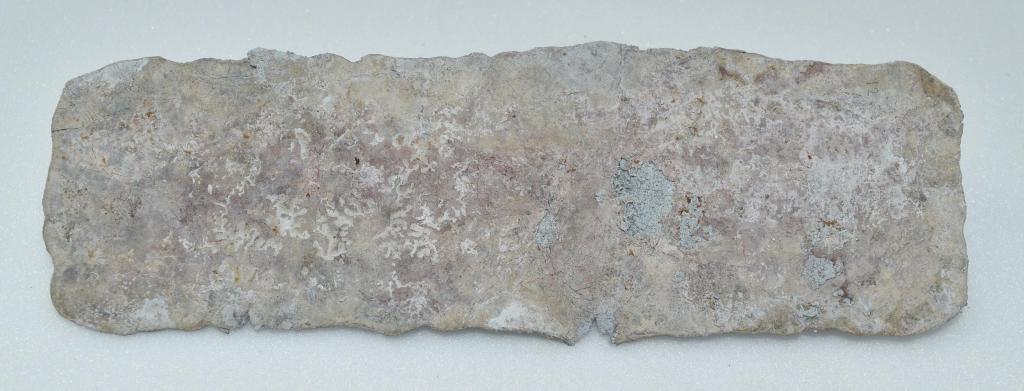
Known as curse tablets, these small sheets of inscribed lead were used across the ancient Greek world to call upon the gods to seek justice against enemies, rivals, thieves and other unfortunate individuals. Some were elaborate, some were brutally direct, and others were surprisingly mundane.
The ancient world is often presented to us through epic poems, magnificent temples and heroic legends. But the curse tablets offer something rather different: a glimpse into the frustrations, grudges and anxieties of ordinary people.
Among the most fascinating examples is a collection of tablets discovered at Knidos, an ancient Greek city on the coast of modern-day Turkey. They contain the sorts of things people actually wanted to tell the gods, and, occasionally, they really wanted the gods to ruin someone’s day.
A Very Personal Request
Nanas dedicates to Demeter and Kore and the gods with Demeter and Kore those who took a deposit from Diokleis, and not having given it back, instead stole it. If they return it may they be ritually pure, but if they do not return it may they be ritually impure, and let they themselves, being punished, bring it back to Demeter and Kore and the gods with Demeter and Kore, and may they not show mercy to the robbers
– Knidos 149
The ancient Greeks didn’t only curse their enemies over grand matters of politics, war or revenge. Sometimes, the problem was considerably more domestic.
Take the above tablet from Knidos, for example. A woman named Nanas appeals to Demeter, Kore and their associated gods after someone took a deposit belonging to a man named Diokleis. What follows is essentially an ancient Greek version of “and another thing…”. If the thieves return the money, they may be ritually pure. If they don’t, they may remain impure, be punished, and eventually bring the money back to the goddess. And, for good measure, Nanas asks the gods not to show mercy to the robbers.
It is remarkably personal. There is no grand mythological drama here, just someone who is thoroughly fed up with another person’s behaviour and wants the divine powers on their side, which is what makes the Knidos tablets so fascinating. The Knidos curse tablets deal with the sorts of problems that feel surprisingly familiar. A missing plate, stolen clothing, a husband who has gone missing – or, perhaps worse, has been unfaithful – to accusations of assault, and even slander involving the alleged poisoning of a husband.
For individuals who could not easily rely on the established secular legal system, such as women, slaves, or those without citizen rights, invoking underworld deities was a way to bypass human courts and present their case before a “divine tribunal”. By formally transferring or “consecrating” a stolen item (or even the thief themselves) to the underworld gods, the person who had committed the wrong would not have wronged another human, but the deity themselves, a way to motivate said deity into action.
The tablets aren’t simply a collection of ancient spells. They’re snapshots of real disputes between real people: arguments over possessions, relationships and reputations. Behind every curse is someone who was sufficiently angry, worried or desperate to ask the divine world to intervene.
So How Does a Curse Work?
So you’ve got your grievance. You’ve found a suitable divine recipient. But how exactly do you turn a complaint into a curse?
The first ingredient is surprisingly mundane: lead. Curse tablets were usually made from thin sheets of lead, which could be written on, folded, rolled or otherwise manipulated. It was cheap, durable and readily available, although, as materials for supernatural revenge go, it certainly lacks the glamour of a crystal ball.
The important part, however, wasn’t simply writing someone’s name on a piece of metal and hoping for the best. The writer might name the person they wanted to curse, explain what they had done, and state what they wanted the gods to do about it.
The tablet could then be left in a place associated with the divine world: a sanctuary, a sacred spring, a tomb, or another location where the gods might be expected to receive it.
These tablets are often described as examples of magic, and ancient Greek curse tablets are commonly referred to as katadesmoi – literally, things intended to “bind”. But calling them simply “magic spells” can make them sound rather more like something out of a fantasy novel than they actually were. A curse could look remarkably like a prayer, but the difference was in what the writer was asking the divine powers to do.
Why Demeter & Persephone?
Knidos was an important Greek city, with temples, theatres, markets and, importantly for these curse tablets, a sanctuary dedicated to Demeter and Kore, which is where several inscribed lead tablets were discovered.
The sanctuary wasn’t simply somewhere to admire a statue and say a quick prayer before heading home. For the people who visited it, this was a place where the human and divine worlds could meet. Offerings could be made, prayers could be heard, and grievances could be handed over to the gods.
The ritual of casting a binding curse involved physical contact with the earth. Lead tablets were folded, often pierced with nails, and buried in places connected directly to the underworld, such as wells, graves, and the sanctuaries of chthonic deities.
Prayers for justice traditionally originated as a distinctly female ritual performed in a goddess’s sanctuary, often invoking Demeter. Demeter’s mythology was deeply rooted in the unjust abduction and theft of her daughter, Persephone. For women seeking justice, the mourning period of her festival (the Thesmophoria) was considered the perfect occasion to appeal to her, as she was a goddess who intimately understood the grief of being treated unjustly and having something precious stolen.
Demeter and Kore were frequently invoked to enforce justice by striking wrongdoers with physical afflictions, specifically burning fevers, a torment so public and unbearable enough that the perpetrator would have to physically travel to Demeter’s sanctuary to confess their crime out loud and return the stolen property to reconcile with the goddess, ensuring that justice was done.
What Can a Curse Tell Us?
At first glance, a collection of ancient curses might seem like an unusual source for understanding everyday life. After all, we’re hardly dealing with the ancient equivalent of a census or household diary. But that is precisely what makes them so useful.
Most surviving Greek literature was written by – and largely for – educated, elite audiences. The curse tablets are different. They preserve fragments of personal disputes, written down because someone cared enough about a particular problem to ask the gods to intervene.
The tablets give us names, relationships and accusations. They show us people worrying about their possessions, their reputations, their marriages and their relationships with other members of their communities. They also provide evidence for how people understood the gods: not as distant figures confined to temples and myths, but as powers who could potentially intervene in the messier parts of everyday life.
A grand temple tells us what a society wanted its religion to look like. A curse tablet can tell us what one annoyed person actually wanted from it. And because the writers were concerned with such ordinary problems, the tablets can feel remarkably intimate. We don’t know whether Nanas ever got Diokleis’s deposit back. We don’t know whether the accused thieves were ever identified. But we know that someone was sufficiently angry about it to put their complaint in writing and leave it with the gods.
The Ancient Art of Holding a Grudge
We tend to imagine ancient Greece through Homer, temples and marble statues. But the people who lived there had problems rather closer to our own. They argued. They fell in love. They lost things. They competed with their neighbours. And sometimes, when ordinary solutions weren’t enough, they asked the gods to intervene.
The curse tablets of Knidos preserve those moments – scratched into lead, buried or deposited for the gods to find. Thousands of years later, they’re still telling us exactly what someone was angry about.

Leave a comment